
Searching Lincoln County Civil Dockets
The statewide Search ARCourts portal is the place to begin. A civil case number gives you the cleanest path in. Working from a name only? Switch to Participants mode. Enter the strongest details you have, and narrow the results to the Lincoln court or location. Businesses appear through the organization or case-description field. The Judgments mode suits public judgment data. Hearings mode works for court dates when the court supplies calendar information.
Check the case number, style, court, type, filed date, and status before you open anything. Remember that Search ARCourts is a discovery copy, never a certified record. Older cases call for the clerk. So do restricted files and matters from a nonparticipating District department. Circuit civil requests go to the Lincoln County Circuit Clerk at 870-628-3154, at the counter, by confirmed fax, or by mail. Small-claims and limited civil filings belong to whichever District department accepted them.
- Decide whether the matter belongs to Circuit Court or a District Court department.
- Search the exact case number, or use party and organization fields with a Lincoln filter.
- Match the case style, court, civil subtype, and filed date.
- Read the case history in order, then inspect the newest hearing and signed order.
- Ask the responsible clerk for a plain or certified document when the event list is not enough.
Lincoln County Civil Judgment Search
Search ARCourts also offers a Judgments tab, separate from participant and case searching. That split helps without a civil case number. It works when you know someone held a creditor or debtor role. Court and date filters cut down false matches. Still, tie any result back to the Lincoln County civil docket. The judgment display does not replace the case history, the signed judgment, or the clerk's certification.
The Arkansas Rules of Civil Procedure set the procedural frame for Circuit civil filings. They cover filing and redaction duties too. Go to the official rules rather than a copied explanation from another county. And never assume a name match is the right person. Confirm the case number, court, caption, and dates before you trust the result.
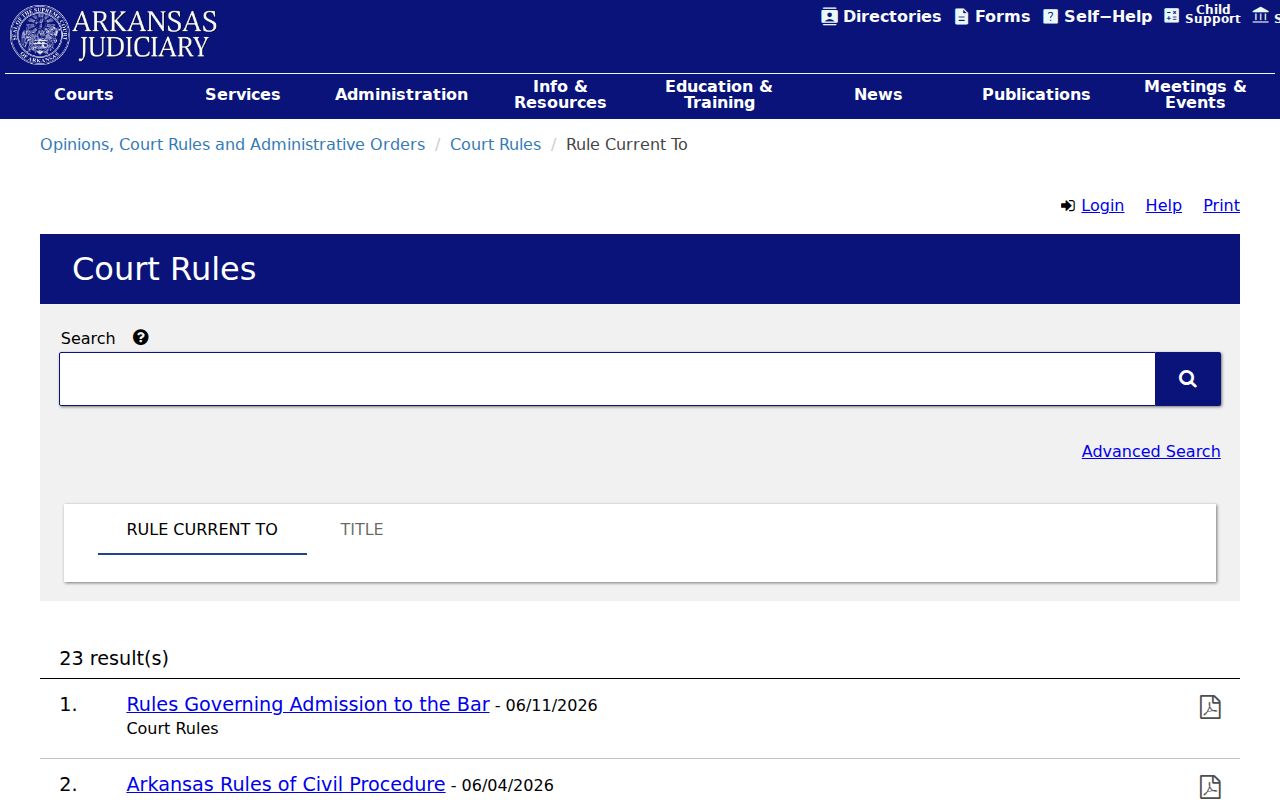
Lincoln County civil cases follow a statewide procedural rulebook. The rules page spells out that statewide procedure, while the local clerk keeps the filed record for the Lincoln County civil docket.
Inside a Lincoln County Civil Docket
A Lincoln County civil docket starts with a case header. It then follows the case as the clerk records each filing and event. Expect the plaintiff or petitioner and the defendant or respondent. Attorneys, the civil subtype, and the court division follow. From there the sequence runs through the complaint or petition, service, answers, motions, hearings, orders, judgment, and later enforcement or appeal activity. One caution. A public event label does not promise that the filed image is online.
| Header | Case number, Lincoln court or division, filed date, civil subtype, and public status. |
|---|---|
| Parties | Case style and the public roles of plaintiffs, petitioners, defendants, or respondents. |
| Initial Filing | Complaint or petition and related opening information. |
| Service and Response | Summons activity, proof-related entries, answer, motion to dismiss, or counterclaim. |
| Motion Practice | Motion, response, reply, notice, hearing, and the separate signed order. |
| Resolution | Trial, nonsuit, dismissal, default, summary judgment, agreed judgment, or final judgment. |
| Later Activity | Writ, garnishment, satisfaction, abstract, or appeal where filed. |
Read the history by date. A motion is only a request, never the ruling itself. A closed or disposed label likewise stays silent about which claims or parties the final judgment actually resolved.
Lincoln County Civil Filing Sequence
A useful reading order starts with the complaint or petition and the civil subtype. Check next whether service was issued and returned. Then find an answer or other response before you read anything into a default entry. Follow each motion through its response, hearing, and signed order. For a court date, hunt down the newest entered setting. At the end, locate the judgment. Then ask whether it resolves every claim and every party.
Post-judgment lines can matter as much as the main result. A writ or garnishment signals enforcement. A satisfaction suggests the obligation was addressed. An appeal may open activity in a new docket. Request the underlying order when the exact effect matters. A brief event caption is not enough.
Note: A document icon, an event title, and a case status make useful index points. None of them replaces the signed civil order.
Civil Case Types on the Docket
Lincoln County Circuit Court serves as the general-jurisdiction court for substantial civil actions. Its Circuit Clerk also maintains domestic-relations and probate case histories. District Court takes limited civil and small-claims matters within the jurisdiction current Arkansas law allows. Dollar limits can shift over time. Ask the court directly before filing or paying. The clerk's office holds the current fee schedule and civil-limit figures.
| Civil matter | Likely docket layer | Important reading point |
|---|---|---|
| General civil dispute | Lincoln County Circuit Court | Trace complaint, service, response, motions, and final judgment. |
| Domestic relations | Lincoln County Circuit Court | A public case shell may coexist with restricted addresses or records. |
| Probate | Lincoln County Circuit Court | Some filings may remain limited even when the case appears. |
| Small claims or limited civil | Responsible District Court department | Contact the filing department when statewide coverage is incomplete. |
A Star City, Gould, or Grady address does not turn a major civil case into a city matter. Jurisdiction and the actual filing decide where the docket lives.
Lincoln County Civil Small Claims
Lincoln County runs its limited civil work through local department desks. There is no one countywide counter. Star City splits its directory into county-case and city-case labels. Grady and Gould each have named departments. So a small-claims docket search starts with whichever desk took the filing. Search ARCourts may show a participating record. The county offers no separate small-claims portal of its own.
If nothing comes up, call the clerk chain. The historical contacts list Star City county cases at 870-628-4904, Star City city cases at 870-628-4244, Grady at 870-479-3904, and Gould at 870-263-4475. Confirm the numbers and the current counter or mailing route before sending anything. Then give the case number, the parties, the rough filed year, the entry you want, and the copy type.
Civil Docket Settings and Hearings
A Lincoln County civil docket can list many kinds of settings. Examples include a motion hearing, a status conference, a pretrial event, docket call, a bench trial, or a jury trial. Read these entries carefully. They are settings, not rulings. They should not be read the way a criminal arraignment would be. Check the case history and the Hearings mode. Then compare them against the newest notice or order in the file.
Old dates can linger as history after a case resets. The latest setting entered usually controls. Only the assigned court can settle a true conflict. A continuance request alone moves nothing. Keep the original civil docket setting until the judge signs an order or the court confirms a new date. The Circuit Clerk or the responsible District department can tell you whether a hearing is still active. They can also confirm where it sits and whether you appear in person or remotely. Court reporter contacts handle transcripts, not calendar confirmation.
Lincoln County Civil Docket Outcomes
Civil outcome terms each answer a different question. A judgment after trial records the court's decision. A default judgment can follow a failure to respond or defend as required, but you still need to check service and the signed order. Summary judgment resolves issues under the governing procedure without a full trial. An agreed judgment reflects terms the parties accepted and the court entered. A settlement, by contrast, may simply end in a dismissal. No settlement details are made public.
- Nonsuit
- A plaintiff ends a claim, often without prejudice depending on the filed order.
- Dismissal
- The claim ends on the grounds and with the effect stated in the order.
- Final judgment
- The court's controlling written resolution, which should be checked for all claims and parties.
- Satisfaction
- A later docket entry connected with fulfillment of a judgment obligation.
The word closed proves nothing about who won. When the outcome matters, get the final judgment itself.
Lincoln County Civil Records Offline
Lincoln County dates to 1871. Its civil record history reaches far past any modern case-search coverage. An older civil docket may live on paper, in a bound index, on microfilm, or in an archive. That can be true even when Search ARCourts returns nothing. Historical and genealogy requests go best with details. Bring party names, the case type, an approximate year, and the exact docket entry or document you need.
For Circuit files, call the Circuit Clerk. You can also visit the counter after confirming access, use the verified fax line, or mail a request to 300 S. Drew Street, Star City, AR 71667. The office publishes no Lincoln-specific copy form, fee list, turnaround time, request email, or public-terminal promise. Ask about file retrieval, total cost, return mailing, the payee, and certification first. Do this before you send payment.
Civil Docket Access Rules
Arkansas Supreme Court Administrative Order 19 supplies the specific access frame for Lincoln County civil dockets. Arkansas FOIA covers qualifying public records. But it cannot override confidential judicial material or the court's own access rules. Domestic and probate cases may show a public case shell. Meanwhile, addresses, financial records, evaluations, protected identifiers, or certain orders stay restricted. Remote access is not a right to every filed image.
The official Arkansas Code portal is the primary route to current statutes. The state rules require protection of sensitive identifiers. That protection applies to material in the file.
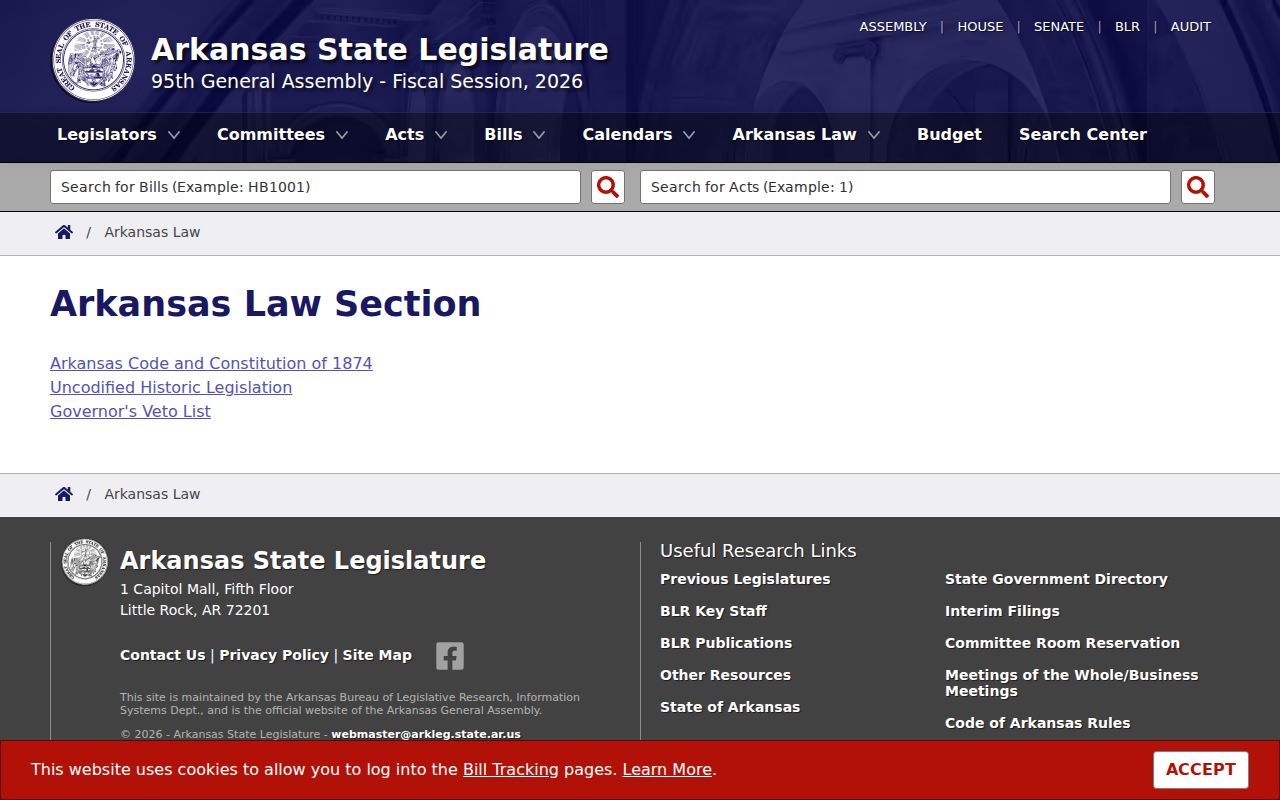
The code-access point supports statute verification without turning a public docket into a source for protected data.
Access point: Administrative Order 19 governs court-record access, exclusions, requests, remote access, and compiled information.
A public event may remain visible while its attachment is withheld. Ask the clerk for the exact public product needed.
A Lincoln County civil docket shows what happened and when. For a certified judgment, go to the clerk who holds the original file.