
Searching Lincoln County Criminal Dockets
Start with Search ARCourts, the Arkansas Judiciary search tool that took over for Public CourtConnect. It lets the public dig into Lincoln County criminal docket entries through its participant, case, and hearing modes. That reach extends only to courts feeding the state system. A full case number works best. If you search by name instead, bring both a first and last name and filter to a Lincoln County court. Two people can share one name. A match alone proves nothing.
The website is not the only door. For Circuit Court records, the Lincoln County Circuit Clerk takes requests at 870-628-3154, at the counter in Room 103 of the courthouse, by fax to 870-628-5546, or by mail to 300 S. Drew Street, Star City, AR 71667. District Court misdemeanors, violations, and preliminary matters go through the department printed on your citation or notice. Before you go, ask about counter access, copy fees, payment options, and mailing steps.
- Identify Circuit Court or the correct District Court department from the filed notice, citation, or case number.
- Open Search ARCourts and use the Cases or Participants mode with a Lincoln court filter.
- Match the case number, court, filed date, case type, and case description before opening a result.
- Read the case history in date order and check Hearings for the newest active setting.
- Contact the responsible clerk for an entry, filed paper, certified judgment, or older case that is not online.
Lincoln County Criminal Search Modes
Search ARCourts gives you several ways into a Lincoln County criminal docket. The Cases tab takes a case identifier or a case description. The Participants mode searches by first, middle, and last name. A hearing check can be narrowed by date and court, when that court supplies the calendar data. There is also an Attorneys mode for tracing counsel named in a public case. A Judgments mode is built for a different task. Lead with whatever field you know best. Keep the court filter tight.
Do not confuse Arkansas eFlex with a public search engine. The eFlex filing environment routes authorized filings into court workflow, yet its own manual says Search Cases does not reach the clerk's full case-management database. Only authorized participants or counsel may pull filed documents remotely. So the split is simple. Search ARCourts for public docket discovery. Use eFlex for filing work. Turn to the Lincoln County clerk for the official criminal file.
Note: An empty portal result may reflect spelling, court participation, case age, or lawful restrictions. It does not prove the absence of a case.
Inside a Lincoln County Criminal Docket
Open a Lincoln County criminal docket and you get the case header first, then a running account of activity as the clerk logs it. Copy the case number exactly as shown. There is no official Lincoln County codebook. Treat LINCOLN CRIMINAL CASE NUMBER as a sample only. Never swap in an invented number pattern. One more quirk: the display can carry an event label even when the underlying charging paper, motion, or order stays closed to remote viewing.
| Case Header | Case number, Lincoln court or division, filed date, case type, and public status. |
|---|---|
| Charge Block | Offense description, count, statutory citation or class when supplied, and count-level status. |
| Participants | State of Arkansas, defendant role, and public attorney or representation data. |
| Case History | Charging event, appearance, counsel, bond activity, motions, orders, plea or trial, and disposition. |
| Hearings | Date, time, setting type, location, and sometimes the judicial officer. |
| Documents | An icon or entry may appear, but remote access can remain restricted. |
Treat a status label as a summary and nothing more. The signed order controls the result. Costs and other financial details, plus document images, depend on the court and the public view, and sealed or protected data never appears.
Lincoln County Criminal Charge Entries
A Lincoln County criminal docket lists charges, but a charge entry is only an allegation. Treat the block as a map of how each count traveled. Start with the information or indictment. From there, follow the arraignment, counsel appointments, bond actions, motions, and settings in order. Read with care: a bond entry can adjust release terms while the charge stays the same. A reset just moves a hearing date without deciding anything. The outcome comes only from a plea the court accepts, a trial result, or the written judgment and sentencing order.
Counts can split apart. Read each one on its own. One charge may get dismissed while another ends in judgment. After the main outcome, new events can still appear through an amended order or a revocation filing. An appeal can also add entries. Note the event date and title. Then ask the Circuit Clerk for the judgment or sentencing order if you need the exact result. For a fuller chronology, the Lincoln County Case Lookup guide walks through each portal field.
How a Criminal Case Moves
A Lincoln County criminal docket tells its story in stages. On the Circuit Court side, a felony usually opens with a charging document. A first appearance follows. From there the docket picks up lawyers, bond rulings, and pretrial motions. Hearings follow, then a plea or a trial. Sentencing and a final order close out the main chapter, though appeals or later enforcement can add more entries after that. District Court misdemeanors follow the same basic arc. They stay with the filing department unless an appeal lifts them into Circuit Court.
Docket flow: Filing › Arraignment › Pretrial › Plea or Trial › Disposition › Sentencing
The docket never forgets. Old setting entries stay on the record, so when you read a Lincoln County court docket, hunt for the newest hearing and the entered order behind any reset. One caution: a request for more time is not the same as a granted continuance.
Lincoln County District Criminal Dockets
Lincoln County runs one countywide District Court. Yet four desks split the public contact work. These are Star City county cases, Star City city cases, Grady, and Gould. That split matters for minor criminal matters. The department clerk for the case, not the Circuit Clerk, keeps the lower-court docket. Before calling anyone, read the court heading printed on your citation or notice.
| Department | Criminal docket role | Published phone |
|---|---|---|
| Star City county cases | County-filed misdemeanors, violations, traffic, and limited matters | 870-628-4904, historical official listing |
| Star City city cases | City-filed ordinance and minor criminal matters | 870-628-4244, historical official listing |
| Grady | Grady District Court criminal and ordinance matters | 870-479-3904 |
| Gould | Gould District Court criminal and ordinance matters | 870-263-4475 |
An official historical notice is the source for these department numbers. Verify them with a call. Search ARCourts coverage also varies. When a lower-court case fails to appear there, the direct clerk is the dependable fallback for the Lincoln County criminal docket.
Courts That Hold Criminal Dockets
Two courts split the criminal work in Lincoln County. The Circuit Court takes felony prosecutions. Its elected Circuit Clerk keeps those files in Star City. That court belongs to the Eleventh West Judicial Circuit. It is a six-division circuit spanning Lincoln and Jefferson Counties. A case assigned to a particular division does not travel to a judge's Pine Bluff mailing address. The Lincoln County criminal docket stays with the Circuit Clerk. The case history names the division and lists current hearing information.
Misdemeanors, violations, and traffic matters land in Lincoln County District Court. Its local departments handle other limited criminal work. An appeal from District Court can open a new Circuit Court case with its own number. So when a docket entry says appealed, transferred, severed, or consolidated, pull both files. Get the source file and the receiving file. The Arkansas Circuit Courts overview and the District Courts overview lay out how the jurisdictional layers fit together.
Lincoln County Criminal Outcome Terms
Outcome words only mean something in context. Read the full Lincoln County criminal docket around them. A plea tells you how a case was set up for resolution. The judgment is what shows whether the court accepted that plea and what sentence followed. Dismissal or nolle prosequi means a charge ended or was not pursued. The entry and order supply the specifics. Acquittal or not guilty reflects adjudication. Deferred or suspended language needs a close read of the exact order. It is never an automatic dismissal on its own.
- Nolle prosequi
- The prosecution's formal decision not to proceed on a charge, subject to Arkansas law and the filed entry.
- Disposition
- The recorded result for a case or count, such as conviction, dismissal, or acquittal.
- Bond forfeiture
- A separate consequence tied to release or appearance conditions, not the result on the underlying charge.
- Sealed
- A record removed from general public access after a qualifying order and handled only through authorized channels.
Check every count and the most recent order. A broad case status can lag behind a newly entered event, and it may not describe what happened to each individual charge.
Lincoln County Criminal Judgment Requests
One caution first: a docket line is not the judgment itself. For a Circuit criminal case, call the Lincoln County Circuit Clerk. Have the exact case number, entry date, and document title ready. Say whether you need a plain or certified copy. The office posts no Lincoln-specific fee for copies or certification. It lists no processing time and no accepted payment list. There is no request email and no online copy form. Get a quote and instructions before you send money or personal information.
A transcript is a different product altogether. A court reporter prepares the verbatim record. The clerk's case history is just an index of filed activity. Once you know the judge and hearing date, use the official court-reporter directory from the Arkansas Judiciary. It helps you find the right reporter.
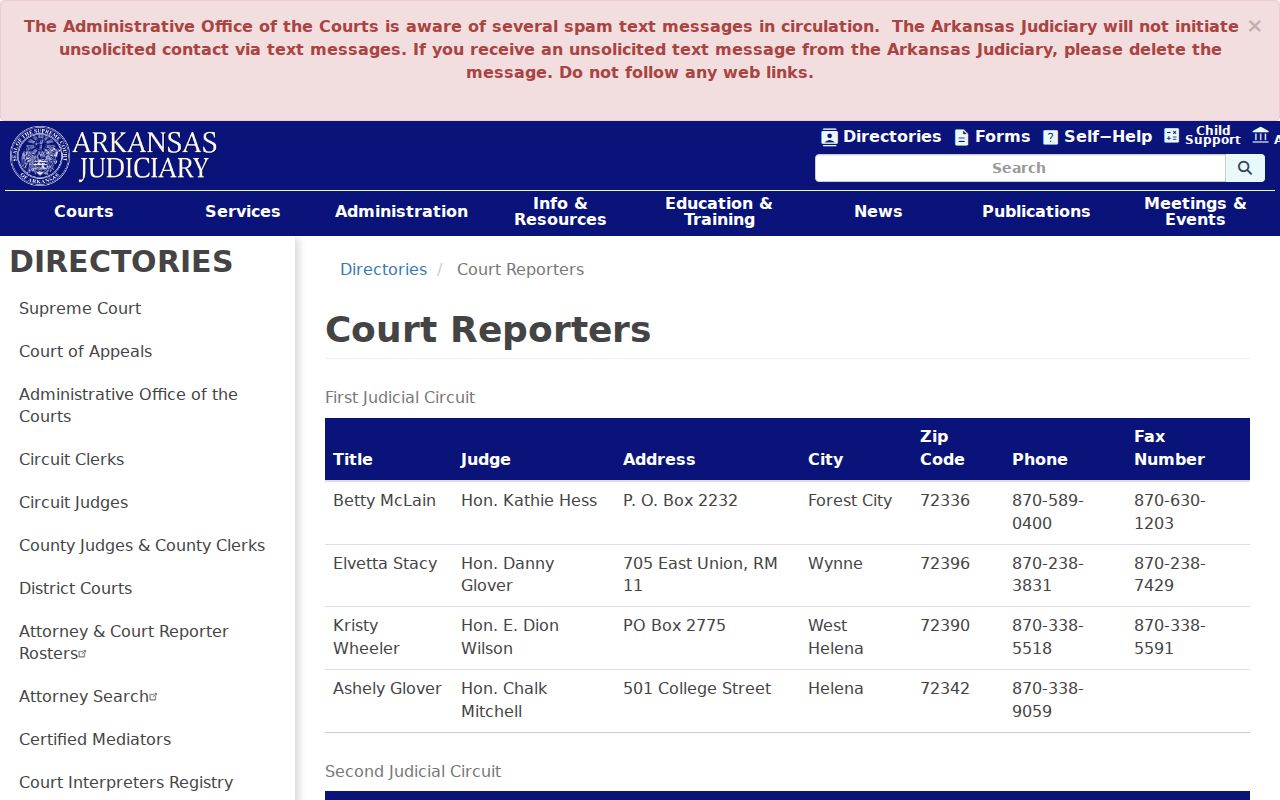
A transcript takes a separate route from the docket itself. The Lincoln County clerk hands out the docket entries and filed orders, while the court reporter holds the record of what was said in the proceeding.
Sealed Dockets and Public Access
Arkansas Supreme Court Administrative Order 19 sets the main rule for public Lincoln County criminal docket access. It opens court records to the public. It also shields material that law or a court order keeps out. So pieces may be missing. Juvenile cases and sealed criminal records can be absent or restricted online. So can protected identifiers and some document images. Even then, a public case shell can stay visible while an attachment stays closed. When something seems absent, ask the clerk. A clerk may be barred, though, from even confirming that a sealed matter exists.
Arkansas access rules:
Administrative Order 19 governs access, exclusions, requests, remote display, and compiled court information.
Administrative Order 21 governs electronic filing, which is distinct from public document access.
Arkansas criminal sealing law limits general access after a valid sealing order.
The Arkansas Judiciary posts official record-sealing forms, though eligibility and access turn on the statute, the case outcome, and any court order. The clerk who handles the filing can walk you through the logistics. That office cannot give legal advice.